
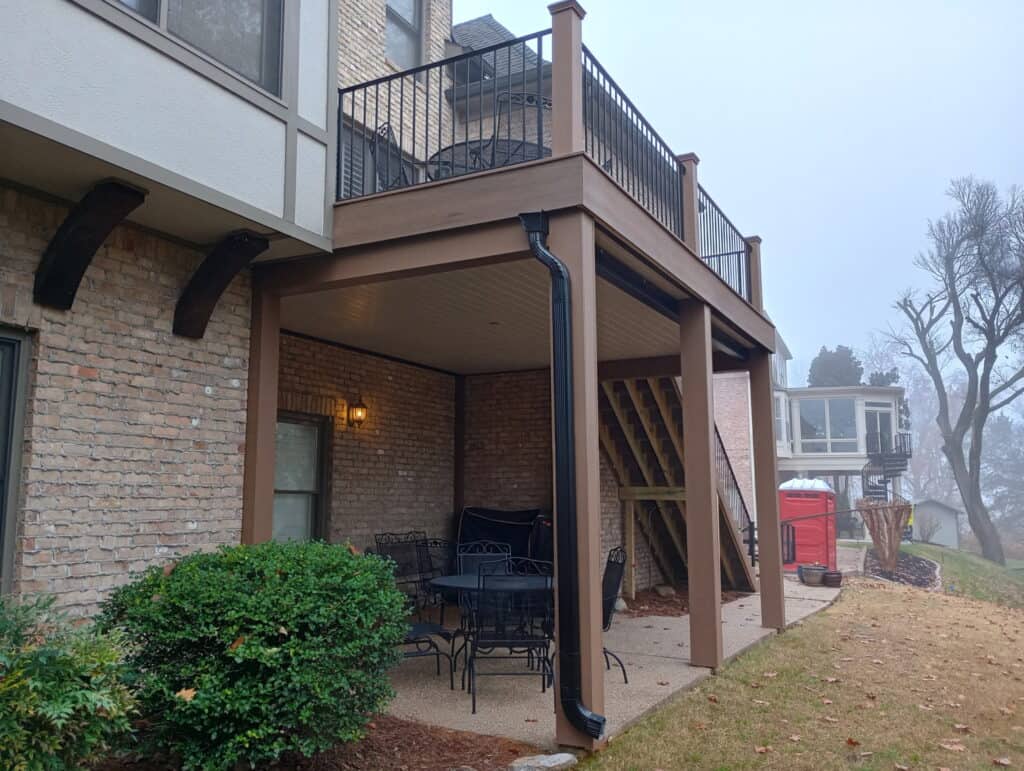
This project started with a deck that needed help. The homeowner wanted a stronger structure, a new surface, safer stairs,…
Published on January 12, 2026
If you are trying to figure out what a custom deck costs in Middle Tennessee, you have probably already noticed how confusing the answers can be. One builder throws out a low number. Another gives a much higher range. Both may be telling the truth.
The problem is not dishonesty. The problem is how deck pricing is usually explained.
Custom decks are not priced well by category. A better way to understand cost is price per square foot, combined with real-world examples. That approach reflects how decks are actually designed and built.
In Middle Tennessee, professionally built custom decks generally range from $35 per square foot up to $150 per square foot. Where your project lands inside that range depends on materials, height, layout, and structural complexity.
Understanding those differences is the key to setting realistic expectations.
Most custom deck projects fall somewhere between $35 and $150 per square foot. That spread exists because no two decks are truly the same.
At the lower end, you are looking at simple, ground-adjacent decks with basic materials. At the higher end, you are dealing with elevated structures, premium materials, complex framing, and upgraded finishes.
The square foot price reflects more than just the boards you walk on. It includes framing, footings, labor, fasteners, railings, stairs, and code requirements.
Let’s start with a straightforward project.
Example:
• Size: 10×20 deck, 200 square feet
• Height: A few feet off the ground
• Materials: Pressure-treated framing and decking
• Layout: Straight design, no angles
• Railings: Basic wood rail system
A deck like this often lands around $50 per square foot.
That puts the total project cost at roughly $10,000, built properly from the ground up.
This type of deck works well for homeowners who want usable outdoor space without visual upgrades or long-term material investments. It keeps upfront costs lower, but it does require ongoing maintenance like staining and sealing.
Material selection is one of the fastest ways to move up or down the price range.
A deck’s height above ground has an impact on cost. Elevated decks typically require deeper footings and additional structural planning, and labor costs increase due to working at height and building stair systems. The beam sizes often remain similar, but the added elevation increases time, safety considerations, and installation complexity.
Stairs alone can add several thousand dollars, especially when they include landings or wider treads.
Homes with walkout basements or sloped lots almost always move into higher price ranges due to added engineering and excavation needs.
A rectangular deck is the most efficient shape to build. As soon as angles, curves, or multiple levels are introduced, labor time increases. Framing becomes more complex. Material waste goes up. Installations slow down.
Even small design changes can push square foot pricing higher because labor scales faster than materials.
Coverage plays a huge role in final cost.
Railings vary widely in price. Wood railings cost the least. Composite systems increase cost. Aluminum railings with cable wire are among the most expensive options.
Upgraded posts, wrapped columns, beadboard ceilings, and decorative trim all raise the square foot cost without increasing deck size. These details often separate basic decks from high-end custom builds.
Most Middle Tennessee municipalities require permits for deck construction. Permit fees, inspections, and code compliance are built into professional pricing. Some areas require engineered drawings, especially for elevated or covered decks.
Cities like Franklin and Brentwood often involve stricter review processes, which can increase both cost and timeline.
A quality builder will explain pricing in terms of square footage, materials, and structure. They will walk your property, account for real site conditions, and outline what pushes cost higher or lower.
Custom decks are long-term investments. Understanding how price per square foot works helps you make informed decisions and avoid surprises once construction begins.
If you are planning a custom deck in Middle Tennessee, an on-site evaluation is the only way to determine where your project fits within the $35 to $150 per square foot range.
Contact us for a free quote today!
Related Posts
This project started with a deck that needed help. The homeowner wanted a stronger structure, a new surface, safer stairs,…
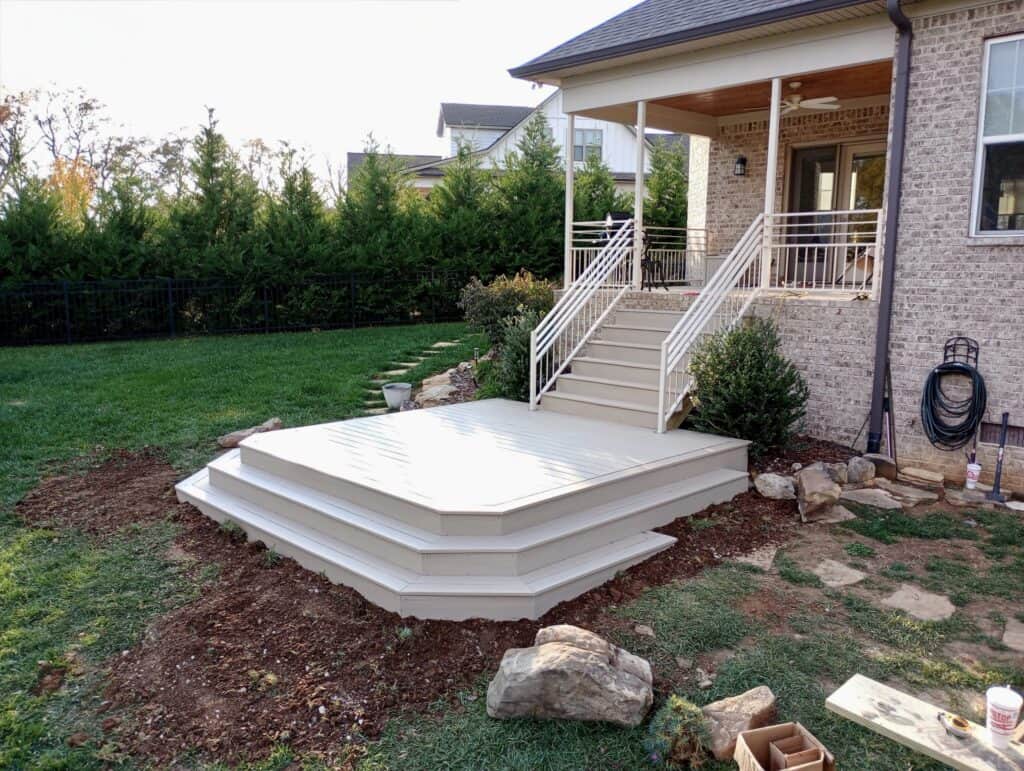
This project added a wide, low platform deck to a home that already had an elevated back porch. The goal…
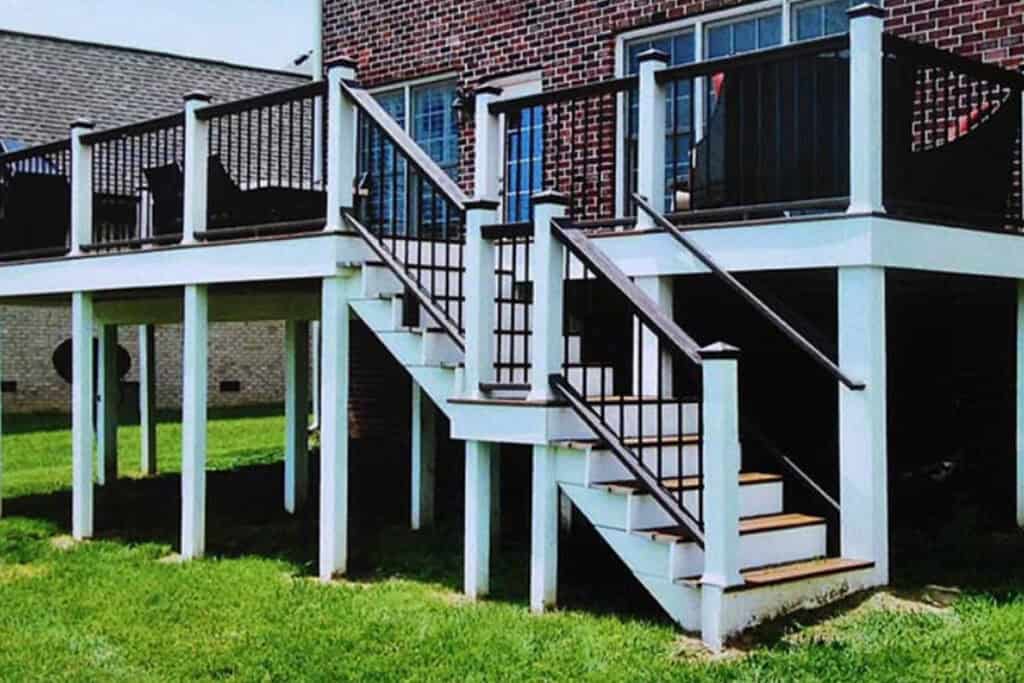
Proper deck maintenance keeps your outdoor space looking great and structurally sound for years to come. Nashville’s hot summers, humid…